Susan E. Brennan
|
Professor, Department of Psychology |
|
Joint appointment, Computer Science |
|
Associated, Department of Linguistics |
|
Telephone: (631) 632-9145 |
|||
|
Fax: (631-632-7876 |
|||
|
Stony Brook, NY 11794-2500 |
Email: susan
“dot” brennan "at" stonybrook
“dot” edu |
||
|
|
|||
|
|
|
|
|
TEACHING
- PREVIOUS:
Psychology 504, Responsible Conduct of Research (graduate, regularly)
- PREVIOUS:
Psychology 260, Survey in Cognition and Perception (undergraduate,
regularly)
- PREVIOUS:
Psychology 520, Psycholinguistics (graduate, every other year)
- PREVIOUS:
Introduction to Grant-Writing: the Rest of the Iceberg (graduate seminar,
every 2-3 years)
- PREVIOUS:
Psychology 384, Research Laboratory in Human Factors (undergraduate, most
years until recently)
- PREVIOUS:
Psychology 365, Psychology of Language (undergraduate)
- PREVIOUS:
Computational and Empirical Approaches to Discourse (Language, Mind, &
Brain Seminar, graduate seminar)
- PREVIOUS:
Pointing, Pausing, Tune, and Turn: Paralinguistic Aspects of Language Use
(graduate seminar)
- PREVIOUS:
Human-Computer Interaction (graduate seminar)
EDUCATION
- 1986-1990
Ph.D., Psychology
(specializing in Psycholinguistics and Cognitive Science), Stanford
University , Stanford, CA.
Dissertation: "Seeking and providing evidence for mutual
understanding"
- 1980-1982
M.S.V.S., Architecture Machine Group (now known as The MIT
Media Lab ). Massachusetts
Institute of Technology ,
Cambridge, MA. Thesis: "Caricature generator"
- 1971-1975
B.A., Anthropology, Cornell University
, Ithaca, NY.
EXPERIENCE
- Currently: Professor, Department of Psychology, State University of New York at Stony Brook.
- 2010-pres.
(as well as previously in 2001-2004) Director of Graduate Studies and
Associate Chair, Department of Psychology, State University of New York at
Stony Brook.
- 2001-pres. Joint appointment, Department of
Computer Science, State University of New York at Stony Brook.
- 1996-2009 Associate
Professor, Department of Psychology, State University of New York at Stony
Brook.
- 1999-2001 Area Head,
Cognitive-Experimental Graduate Training Program. Department of Psychology, State
University of New York at Stony Brook.
- 1990-1996
Assistant Professor, Department of Psychology, State University of New
York at Stony Brook. Associated, Department of Linguistics.
- 1991-1992
Visiting Scholar, Center for the Study of Language and Information (CSLI),
Stanford University.
- Summer
1991 Consultant, Human Interface Group, Apple
Computer, Inc. , Cupertino, CA. Conducted research on computer speech
applications.
- 1986-1989
Part time/summer employment, Member of the Technical Staff, Human/Computer
Interface Department, Hewlett-Packard
Labs , Palo Alto, CA. Conducted user
interface research & development on the Natural Language Project.
- 1984-1986
Member of the Technical Staff, Hewlett-Packard
Labs , Palo Alto, CA. Conducted research on natural language
understanding, discourse models, human-computer interfaces.
- 1982-1984
Research Scientist, Atari Inc., Sunnyvale, CA. Conducted research on
multimedia interfaces, computer-generated caricature, animation, and
educational software in Alan Kay’s group [1] [2]. Consulted for parent
company Warner Bros., New York, NY, on user interfaces, videodisc
applications, electronic encyclopedia, and interactive cable network.
- Previously...
worked as an engineer in broadcast television and radio, including at WGBH
and WSBK, Boston.
PUBLICATIONS
1. Kuhlen, A. K., Bogler,
C., Brennan, S. E., & Haynes, J. D. (Under review). Brains in
dialogue: Decoding neural preparation of speaking to a conversational partner.
2. Horton, W. S., & Brennan, S. E.
(2016). The role of metarepresentation in the
production and resolution of referring expressions. In K. van Deemter, E. Krahmer, A. Gatt, & R. P.G. van Gompel
(Eds.), Frontiers in Psychology: Models of Reference.
3. Hwang, J., Brennan, S. E., &
Huffman, M. K. (2015). Phonetic adaptation in non-native spoken dialogue:
Effects of priming and audience design. Journal
of Memory and Language, 81, 72-90.
4.
Galati, A. & Brennan, S. E.
(2013). Speakers adapt gestures to
addressees’ knowledge: Implications for models of co-speech gesture
Language and Cognitive Processes.
5. Brennan,
S. E., Schuhmann, K. S., & Batres, K. M. (2013). Collaboratively setting perspectives
and referring to locations across multiple contexts.
Proceedings, Pre-Cog Sci 2013 Workshop,
Production of referring expressions: Bridging the gap between cognitive and
computational approaches to reference.
6. Brennan,
S. E., Schuhmann, K. S., & Batres, K. M. (2013). Entrainment on the move and in the
lab: The Walking Around Corpus.
Proceedings of the 35th Annual Conference of the Cognitive Science
Society.
7. Kuhlen, A. K. & Brennan, S. E. (2013). Language in dialogue: When
confederates might be hazardous to your data.
Psychonomic Bulletin & Review,
(published online 27 November, 2012).
8. Kuhlen, A. K., Galati, A., & Brennan,
S. E. (2012). Gesturing integrates top-down and
bottom-up information: Effects of speakers’ expectations and addressees’
feedback.
Language and Cognition, 4, 17-41.
9. Brennan,
S. E. (2012). Conversation and dialogue.
In H. Pashler (Ed.), Encyclopedia of the
Mind. SAGE Publications. [Email
me for a .pdf copy]
10. Brennan,
S. E., Hanna, J. E., Zelinsky, G. J., & Savietta, K. J. (2012). Eye gaze cues for coordination in
collaborative tasks.
DUET 2012 Workshop: Dual eye tracking in CSCE. 2012 ACM Conference on
Computer Supported Cooperative Work, Seattle, WA.
11. Neider, M. B., Chen, X., Dickinson, C. A.,
Brennan, S. E., & Zelinsky. G. J. (2010). Coordinating spatial referencing using shared
gaze.
Psychonomic Bulletin & Review,
17, 718-724.
12. Kuhlen, A. K. & Brennan, S. E. (2010). Anticipating Distracted Addressees:
How Speakers’ Expectations and Addressees’ Feedback Influence Storytelling.
Discourse Processes, 47, 567-587.
13. Brennan,
S. E., Galati, A., & Kuhlen, A. (2010). Two minds, one dialog: Coordinating
speaking and understanding. In B. Ross (Ed.), Psychology of Learning
and Motivation, vol. 53. Academic
Press/Elsevier. [Email
me for a .pdf copy]
14. Galati,
A. & Brennan, S. E. (2010). Attenuating repeated information:
For the speaker, or for the addressee?
Journal of Memory and Language, 62, 35-51.
15. Brennan,
S. E. & Hanna, J. E. (2009). Partner-specific adaptation in
dialogue. Topics in Cognitive Science
(Special Issue on Joint Action), 1, 274-291. [Email
me for a .pdf copy]
16. Kraljic, T, Samuel, A. G., & Brennan,
S. E. (2008). First impressions and last resorts:
How listeners adjust to speaker variability.
Psychological Science 19, 332-338.
17. Kraljic, T, Brennan, S.
E. & Samuel, A. G. (2008). Accommodating
Variation: Dialects, Idiolects, and Speech Processing. Cognition, 107,
54-81.
18. Ekeocha J. O. (née Ohaeri), & Brennan, S. E. (2008). Collaborative
recall in face-to-face and electronic groups. Memory, 16, 245-261.
19. Stent,
A., Huffman, M. K. & Brennan, S. E.
(2008). Adapting
speaking after misrecognition: A study of hyperarticulation. Speech Communication, 50,.
20. Brennan,
S. E., Chen, X., Dickinson, C., Neider, M., & Zelinsky,
G. (2007). Coordinating
cognition: The costs and benefits of
shared gaze during collaborative search. Cognition, 106, 1465-1477.
21. Hanna,
J. E. & Brennan, S. E. (2007). Speakers' eye gaze disambiguates
referring expressions early during face-to-face conversation. Journal of Memory and Language,
57, 596-615.
22. Brennan,
S. E., Mueller, K., Zelinsky, G.,
Ramakrishnan, I.V., Warren, D. S., & Kaufman, A. (2006). Toward a Multi-Analyst, Collaborative Framework for
Visual Analytics. IEEE Symposium on Visual Analytics Science
and Technology (VAST 2006).
Baltimore, MD.
23. Brennan,
S. E., & Lockridge, C. B. (2006). Computer-mediated communication: A cognitive
science approach. In K. Brown (Ed.), ELL2,
Encyclopedia of Language and Linguistics, 2nd Edition (pp. 775-780).
Oxford, UK: Elsevier Ltd.
24. Kraljic, T., &
Brennan, S. E. (2005). Using prosody and optional words to disambiguate
utterances: For the speaker or for the addressee?
Cognitive Psychology, 50, 194-231.
25. Brennan,
S. E. (2005). How
conversation is shaped by visual and spoken evidence. In J. Trueswell & M. Tanenhaus
(Eds.), Approaches to studying world-situated language use: Bridging the
language-as-product and language-action traditions (pp. 95-129).
Cambridge, MA: MIT Press.
26. Stein,
R. & Brennan, S. E. (2004). Another person's eye gaze as a cue in solving
programming problems. Proceedings, ICMI 2004,
Sixth International Conference on Multimodal Interfaces (pp. 9-15), Penn State
University, State College, PA.
27. Brennan,
S. E. & Metzing, C. A. (2004). Two steps forward, one step back: Partner-specific
effects in a psychology of dialogue.
Behavioral and Brain Sciences, 27.
28. Metzing, C. & Brennan,
S. E. (2003). When conceptual pacts are broken: Partner-specific
effects in the comprehension of referring expressions.
Journal of Memory and Language, 49, 201-213.
29. Schober, M. F., &
Brennan, S. E. (2003). Processes of interactive spoken discourse: The role
of the partner. In A. C. Graesser, M. A. Gernsbacher,
& S. R. Goldman (Eds.), Handbook of discourse processes (pp.
123-164). Hillsdale, NJ: Lawrence Erlbaum.
30. Lockridge, C. B., &
Brennan, S. E. (2002). Addressees’_needs influence speakers’ early syntactic choices.
Psychonomic Bulletin and Review, 9,
550-557.
31. Brennan,
S. E. (2002). Visual co-presence, coordination signals, and partner
effects in spontaneous spoken discourse. Journal of the Japanese
Cognitive Science Society, 9, 7-25.
32. Kraut,
R. E., Fussell, S. R., Brennan, S. E., & Siegel, J. (2002). Understanding effects of proximity on
collaboration: Implications for technologies to support remote collaborative
work. In P. Hinds & S. Kiesler, Distributed work (pp. 137-162). Cambridge,
MA: MIT Press.
33. Brennan,
S. E., & Schober,
M. F. (2001). How listeners compensate for disfluencies in
spontaneous speech. Journal of Memory and
Language, 44, 274-296.
34. Bortfeld, H., Leon, S.
D., Bloom, J. E., Schober, M. F., & Brennan, S.
E. (2001). Disfluency rates in spontaneous speech: Effects of
age, relationship, topic, role, and gender
. Language and Speech, 44, 123-149.
35. Gerrig, R. H.,
Brennan, S. E., & Ohaeri,
J. O. (2001). What characters know: Projected knowledge and
projected co-presence. Journal of
Memory and Language, 44, 81-95. Stimuli
36. Brennan,
S. E. (2000). Processes that shape conversation and their
implications for computational linguistics.
Proceedings, 38th Annual Meeting of the ACL .
Hong Kong :
Association of Computational Linguistics.
37. Gerrig, R. H., Brennan, S. E., & Ohaeri,
J. O. (2000). What can we conclude from speakers behaving badly? Discourse
Processes, 29, 173-178.
38. Gerrig, R. H., Ohaeri, J. O., & Brennan, S. E. (2000). Illusory
transparency revisited. Discourse Processes, 29, 137-159.
39. Cahn,
J. E., & Brennan, S. E. (1999). A psychological model of grounding and repair in
dialog. Proceedings, AAAI Fall
Symposium on Psychological Models of Communication in Collaborative Systems
(pp. 25-33). North Falmouth, MA: American Association for Artificial
Intelligence.
40. Brennan,
S.E., & Schober, M.F. (1999). Uhs and interrupted words: The information available to
listeners. In Proceedings of the 14th International Congress of
Phonetic Sciences, Satellite Meeting on Disfluency in Spontaneous Speech
(pp. 19-22), Berkeley, CA.
41. Bortfeld, H., Leon, S.
D., Bloom, J. E., Schober, M. F., & Brennan, S.
E. (1999). Which speakers are most disfluent in
conversation, and when? In Proceedings of the 14th International
Congress of Phonetic Sciences, Satellite Meeting on Disfluency in Spontaneous
Speech (pp. 7-10), Berkeley, CA.
42. Brennan,
S. E., & Ohaeri, J. O. (1999). Why do electronic conversations seem less
polite? The costs and benefits of hedging.
Proceedings, International Joint Conference on Work Activities, Coordination,
and Collaboration (WACC
'99) (pp. 227-235). San Francisco, CA: ACM.
43. Brennan,
S. E. (1998). The grounding problem in conversation with and
through computers. In S. R. Fussell & R. J. Kreuz (Eds.),
Social and cognitive psychological approaches to interpersonal communication
(pp. 201-225) .
Hillsdale, NJ: Lawrence Erlbaum.
44. Brennan,
S. E. (To appear). The vocabulary problem in spoken language systems.
In S. Luperfoy (Ed.), Automated spoken dialog
systems. Cambridge, MA: MIT Press.
45. Bortfeld, H. &
Brennan, S. E. (1997). Use and acquisition
of idiomatic expressions in referring by native and non-native speakers. Discourse
Processes, 23, 119-147.
46. Brennan,
S. E. (1997). Centering as a psychological resource for achieving joint
reference in spontaneous discourse. In M. Walker, E. Prince, and A. Joshi
(Eds.), Centering in discourse, pp.227-249. Oxford University Press.
47. Brennan,
S. E. & Clark,
H. H. (1996). Conceptual
pacts and lexical choice in conversation. Journal of Experimental
Psychology: Learning, Memory and Cognition, 22, 482-1493.
48. Brennan,
S. E. (1996). Lexical entrainment in spontaneous dialog.
Proceedings, 1996 International Symposium on Spoken Dialogue , pp. 41-44. Philadelphia, PA:
ISSD-96.
49. Brennan,
S. E. and Williams, M. (1995). The feeling of another's knowing: Prosody and
filled pauses as cues to listeners about the metacognitive states of speakers.
Journal of Memory and Language , 34, 383-398.
50. Brennan,
S. E. (1995). Centering
attention in discourse. Language and Cognitive Processes, 10,
137-167.
51. Brennan,
S. E. & Hulteen, E. (1995). Interaction and feedback in a spoken language
system: A theoretical framework.
Knowledge-Based Systems, 8, 143-151.
52. Brennan,
S. E. and Ohaeri, J. O. (1994). Effects of message style on users' attributions
toward agents. CHI '94, Human Factors in
Computing Systems, Conference Companion , pp. 281-282.
53. Don,
A., Brennan, S., Laurel, B., & Shneiderman, B.
(1992). Anthropomorphism: From Eliza to Terminator 2.
Panel presentation, CHI '92, Human Factors in Computing Systems, Monterey, CA.
54. Brennan,
S. E. (1991). Conversation with and through computers.
User Modeling and User-Adapted Interaction, 1, 67-86.
55. Whittaker,
S. J., Brennan, S. E., and Clark, H. H. (1991). Coordinating activity: An
analysis of interaction in computer-supported cooperative work. Proceedings, CHI
'91, Human Factors in Computing Systems , pp. 361-367. New Orleans, LA:
Addison-Wesley.
56. Clark,
H. H., & Brennan, S. E. (1991). Grounding in communication.
In L. B. Resnick, J. Levine, & S. D. Teasley
(Eds.), Perspectives on socially shared cognition (pp. 127-149).
Washington, DC: APA. Reprinted in R. M. Baecker
(Ed.), Groupware and computer-supported cooperative work: Assisting
human-human collaboration (pp. 222-233). San Mateo, CA: Morgan
Kaufman Publishers, Inc.
57. Brennan,
S. E. (1990). Conversation as direct manipulation: An iconoclastic view. In
B.K. Laurel (Ed.), The Art of Human-Computer
Interface Design. Reading, MA:Addison-Wesley.
58. Brennan,
S. E. (1988). The multimedia articulation of answers in a natural
language database query system. Proceedings,
Second Conference on Applied Natural Language Processing, pp. 1-8. Austin, TX:Association of Computational
Linguistics.
59. Brennan,
S. E., Friedman, M. W., & Pollard, C. J. (1987). A centering approach to pronouns.
Proceedings, 25th Annual Meeting of the ACL pp. 155-162. Stanford, CA:
Association of Computational Linguistics.
60. Rhodes,
G., Brennan, S., & Carey, S. (1987). Identification
and ratings of caricatures: Implications for mental representations of faces.
Cognitive Psychology, 19, 473-497.
61. Brennan,
S. E. (1985). The
caricature generator. Leonardo , 18,
170-178. Republished (2007) in
Leonardo’s 40th anniversary volume, as the article that "holds the
notable distinction of being the most 'cited' article published in Leonardo.”
In progress...
- Hanna,
J. E., Galati, A., Brennan, S. E., & Savietta,
K. J. (Accepted pending revision).
Benefits and costs of using eye gaze in face-to-face conversation.
- Galati,
A. & Brennan, S. E. (Under
review). Toward a Constraint-Based Model of Co-Speech Gesture.
- Brennan,
S. E., Schuhmann, K., & Batres,
K. M. (In preparation). Entrainment
on the Hoof.
- Amati,
F., & Brennan, S. E. (In preparation).
Detecting Perspective and Theory of Mind Inferences from Eye
Movements.
- Huang,
J., Huffman, M. K., & Brennan, S. E. (In preparation). Speaking
L2 with L1 phonology: Effects of priming, pragmatic context, and audience
design.
- Brennan,
S. E. & Huffman, M. K. (In preparation). Dialect in a conversational task: What
converges?
- Brennan,
S. E., Huffman, M. K., & Hannigan, S. (In preparation). Speaker-specific ambiguity: Effects of
dialect.
- Brennan,
S. E. & Lockridge, C. B. (In
preparation). Elements of visual
co-presence in referential communication.
- Lockridge, C. B.,
& Brennan, S. E. (In preparation). Impact of working memory span
on referring in conversation. (or see Lockridge, C. B. (2007). Impact of Working Memory
Span on Referring in Conversation.
Unpublished dissertation, Stony Brook University)
AWARDS
Dean's Award for Excellence in
Service to Graduate Education by a Graduate Program Director (May 16, 2012)
Chancellor's Research Recognition Award, The Research Foundation of SUNY
(2003) [bio]
NSF Graduate Research Fellowship,
Stanford University (1986-1989)
American Can Company Full Scholarship,
Cornell University (1971-1975)
CURRENT RESEARCH GRANTS
- EAGER:
Modeling Distinctive Partners in Adaptive Spoken Dialog. PI on collaborative NSF proposal with
Marilyn Walker of UCSD.
9/1/10-2/1/12.
- Using
gaze cues to build partner models for collaborative behavior. Co-PI
(with Gregory Zelinsky and Dimitris Samaras) on
NSF SoCS interdisciplinary project in Psychology
and Computer Science.
8/1/11-7/31/15.
PREVIOUS RESEARCH
GRANTS
- HSD:
See Where I'm Looking: Using Shared Eyegaze to
Coordinate Time-Critical Collaborative Tasks. Co-PI on NSF Human Social
Dynamics proposal with Psychology and Computer Science. 10/1/05-9/30/08, no-cost extension
through 8/10.
- ITR-Medium:
Adaptive Spoken Dialog with Human and Computer Partners. PI on interdisciplinary NSF grant with
Co-PIs in Psychology, Linguistics, and Computer Science Departments. 11/03-10/07.
- ITR:
Contributions of Eye Movements and Shared Attention to Collaborative
Tasks.” PI on NSF grant. 2000-2003.
- KDI:
The Importance of Shared Visual Environments for Collaborative Tasks. Co-PI on NSF grant to Carnegie Mellon
University; PI on subcontract to Stony Brook from CMU . 1999-2002.
- Psychological
Representations of Multiple Agents in Text and Spoken Discourse. Co-PI, NSF's Interactive Systems Program
(PI, Richard Gerrig). 1997-2000.
- Speech
Disfluencies in Spoken Language Systems: A Dialog-Centered Approach. PI, NSF's Interactive Systems
Program. 1995-1998.
- Interactive
processes of language use in human-computer interfaces. PI, NSF's
Interactive Systems Program.
1992-1995.
PROFESSIONAL LINKS
- Psycholinguists
- Association for Computational Linguistics
- Association
for Computational Linguistics Editorial Board
- American
Psychological Society
- Psychonomic Society
- ACM
SIGCHI
LIFE, etcetera
On October 2, 1995, Harrison
Andrew Brennan was born, weighing 5 lbs, 4 oz.
Harry's Language Diary -
Coming soon!
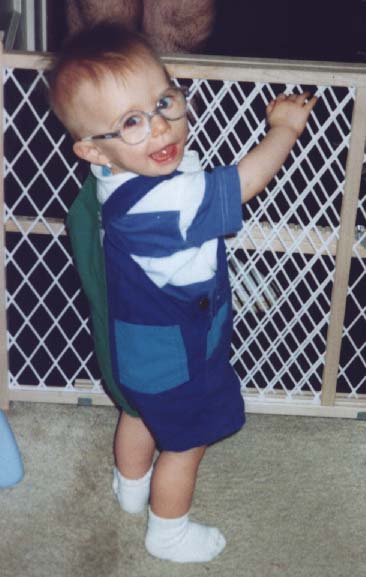
(Harry is now in high
school – way too busy for updates!)